 Red wine
 White wine
 Rosé wine
 Primeurs
 Sherry and Port wine
 Sweet wine
 Orange wine
 Vermouth
 Champagne
 Cava
Cava Prosecco
 Lambrusco
 Crémant
 Moscato d'Asti
 Franciacorta
 Pet-Nat
 Corpinnat
 Other sparkling wines
 Rhum
Rhum Gin
Gin Whisky
 Vodka
Vodka Cognac
 Brandy
 Pastis
 Tequila
 Mezcal
 Grappa and Eau de vie
 Calvados
 Liqueurs
 Pacharán
 Apéritifs
 Wine gift boxes
 Boxed wines
 Boxed sparkling wines
 Wine bottles and glasses
 Gift card
 Non alcoholic Wine
 Non alcoholic Sparkling wine
 Non alcoholic Gin
 Other non-alcoholic drinks
 Aromas
 Wine conservation
 Decanters and aerators
 Bottle identifiers
 Corkscrews
 Service
 Glass identifiers
 Cleaners
 Accessories set
 Wine glasses
 Contact

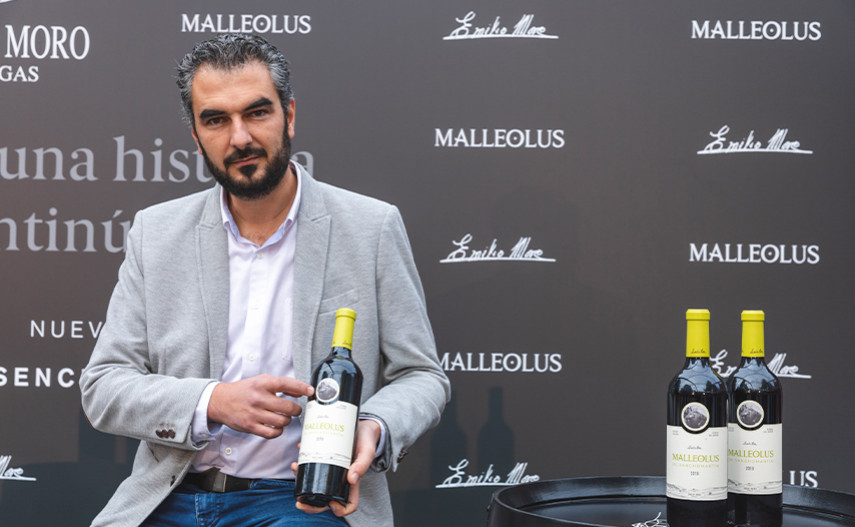
Discovering Álvaro Maestro, Technical Director of Emilio Moro
Vultures soar over the moorlands of Pesquera de Duero as we depart from the winery. We have come to one of the highest and most iconic areas of Ribera del Duero, at over 900 metres altitude, and up here the landscape tells many stories even before a bottle is opened.
Along the way, we come across some remnants left by vultures after feeding. Álvaro Maestro stops to explain that these are pellets, the small balls these birds expel after eating, containing hair, feathers, and bones they cannot digest. It's a curiosity, but also a good way to get to know Álvaro.
Technical director and winemaker at Emilio Moro, he has been with the winery for nearly 20 years, starting as a harvest worker. He has the rare ability to turn a technical explanation into something easy to understand. With him, talking about a pellet, soil, or how a grape ripens becomes a conversation about the landscape before us.
A Family, a Territory, and a Way of Understanding Wine
Álvaro's relationship with Emilio Moro is much more than professional. He has grown within the winery as the family itself has grown, and when he talks about it, the word company seems insufficient. “More than a company, it's a family I've grown with.”
Perhaps that's why he doesn't see his work as that of a winemaker imposing a personal vision. “I'm not a creative author. I put my knowledge at the service of the family.” His role is to know the territory, understand what the family has built over generations, and use all that knowledge to continue improving it.
This transmission is even present on the labels, with black and white family photographs that serve as a link between past and present. A recognisable identity that, however, has never meant standing still.
Over 900 Metres: When Altitude Defines the Wine
On the plateau, we better understand why Álvaro refers to Ribera del Duero as a borderline climatic zone. Up here, at over 900 metres, the conditions are demanding, and the thermal contrasts between day and night are hugely significant. The altitude allows the grape to ripen slowly, preserving acidity and freshness while achieving the necessary intensity.
“Tempranillo allows us to bring out the best in this borderline climate.” For Álvaro, this variety finds one of its best allies in these conditions. The goal is to achieve wines with concentration and depth, but also with tension and freshness. And that quest for balance begins long before the winery. Every metre counts, and knowing how the vineyard responds in these conditions allows for better decisions throughout the cycle. Ultimately, it's about understanding the place so the wine can express it.
An Identity Looking to the Future
“Our style doesn't change, but we are flexible.” Álvaro uses a simple and very easy-to-understand comparison. A person can remain the same at 50 years old, even if they don't dress the same as when they were 30. The same happens with wine. The essence remains, but the way of expressing it evolves.
Emilio Moro was one of the first wineries in Ribera del Duero to bet on young wines with around six months of barrel ageing, aiming to polish and harmonise them without losing their character. A decision that well summarises this philosophy. Respect what works, but never stop looking for ways to do it better.
This outlook is also behind the future of the winery. The new facilities and ongoing works until 2028 are part of a commitment to continue growing in quality and to build 21st-century wine tourism. The international dimension is gaining weight, but the starting point remains the same: the territory.
And before we leave, there's one last question. With a Malleolus de Sancho Martín in front of us, and knowing that Álvaro has been exploring the relationship between wine, gastronomy, and music, it was almost obligatory to ask him which song he would pair it with. The answer is Mar Antiguo by El Último de la Fila.
Perhaps there's no better way to end the visit. After talking about a landscape, a family, and a way of understanding wine, discovering that a bottle can also have its own soundtrack is the perfect conclusion.