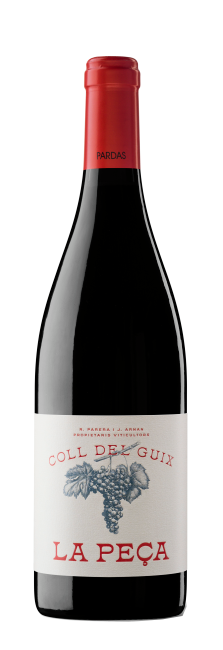
Can a single vineyard be the origin of two distinct wines, sharing the same name but possessing different souls? In this unique narrative, reminiscent of a vinous fable, two wineries converge on the same plot to present us with two interpretations of the same landscape: the vineyard of La Peça de Coll del Guix. A terrain so exceptional it could well be considered a Mediterranean grand cru.
Celler Pardas is the endeavour of Ramon Parera and Jordi Arnan, two viticulturists who have been cultivating their vineyards at Finca Can Comas in Sant Sadurní d’Anoia (Barcelona) since 1996, with a clear philosophy: they only produce wines from what they themselves cultivate. Their relationship with the land is intimate, direct, and empathetic. Each plot is tended with a sensitivity that is reflected in the purity of their wines.
Pardas La Peça de Coll del Guix is a tale of collaboration, passion, and reverence for heritage. This remarkable plot, planted in 1961 at 485 metres above sea level, on complex blue marl soils with a southeast orientation, was discovered thanks to the call of its owner who, along with his father, decided to abandon winemaking in their family. Rather than let the vineyard fade into oblivion, the idea emerged to rescue this old parcel of the sumoll red variety, a hidden treasure in a more continental context than the traditional Penedès.
In this project, the idea arose to invite Roc and Leo Gramona of L’Enclòs de Peralba, sharing knowledge with a new generation of viticulturists dedicated to the vineyard above the viticulturist. The collaboration with L’Enclòs de Peralba, who create their own version of the vineyard's sumoll (a wine with a name and label very similar to Pardas La Peça de Coll del Guix), exemplifies generosity, humility, and love for the terroir, where the vineyard, not the author, takes precedence. Two visions of the same vineyard, a concept prevalent in other great wine regions, yet much needed in the Penedès.
Pardas La Peça de Coll del Guix is crafted from a manual harvest, in small crates, focusing more on infusion than extraction: whole clusters foot-trodden, spontaneous fermentation in stainless steel, and aged for six months in a combination of old 500-litre barrels and concrete eggs. The result is a pale wine, with extremely fine tannins and a natural elegance reminiscent of a Jura ploussard (France) rather than any other known sumoll. A wine that champions heritage and offers the consumer a completely different version of sumoll, full of history, character, authenticity, and elegance, where friendship, cooperation, and respect for the place yield something truly extraordinary.





 Red wine
 White wine
 Rosé wine
 Primeurs
 Sherry and Port wine
 Sweet wine
 Orange wine
 Vermouth
 Champagne
 Cava
Cava Prosecco
 Lambrusco
 Crémant
 Moscato d'Asti
 Franciacorta
 Pet-Nat
 Corpinnat
 Other sparkling wines
 Rhum
Rhum Gin
Gin Whisky
 Vodka
Vodka Cognac
 Brandy
 Pastis
 Tequila
 Mezcal
 Grappa and Eau de vie
 Calvados
 Liqueurs
 Pacharán
 Apéritifs
 Wine gift boxes
 Boxed wines
 Boxed sparkling wines
 Wine bottles and glasses
 Gift card
 Non alcoholic Wine
 Non alcoholic Sparkling wine
 Non alcoholic Gin
 Other non-alcoholic drinks
 Aromas
 Wine conservation
 Decanters and aerators
 Bottle identifiers
 Corkscrews
 Service
 Glass identifiers
 Cleaners
 Accessories set
 Wine glasses
 Contact


 D.O. Penedès
(Catalonia)
D.O. Penedès
(Catalonia)


 Attention
