


 Red wine
 White wine
 Rosé wine
 Primeurs
 Sherry and Port wine
 Sweet wine
 Orange wine
 Vermouth
 Champagne
 Cava
Cava Prosecco
 Lambrusco
 Crémant
 Moscato d'Asti
 Franciacorta
 Pet-Nat
 Corpinnat
 Other sparkling wines
 Rhum
Rhum Gin
Gin Whisky
 Vodka
Vodka Cognac
 Brandy
 Pastis
 Tequila
 Mezcal
 Grappa and Eau de vie
 Calvados
 Liqueurs
 Pacharán
 Apéritifs
 Wine gift boxes
 Boxed wines
 Boxed sparkling wines
 Wine bottles and glasses
 Gift card
 Non alcoholic Wine
 Non alcoholic Sparkling wine
 Non alcoholic Gin
 Other non-alcoholic drinks
 Aromas
 Wine conservation
 Decanters and aerators
 Bottle identifiers
 Corkscrews
 Service
 Glass identifiers
 Cleaners
 Accessories set
 Wine glasses
 Contact

Rosé Wines, the time is now
Rosé, a type of wine that disorientates consumers from mainland Spain and that quite often has the “second-class wine” stigma attached to it. With this article, our intention is to give you another perspective on this type of wine and let you sense it differently, as a product that can reach high-quality standards and, most of all, as a wine that is essential at this time of the year.
- Castino, a renown Italian scholar in microbiology and oenology, stated: A rosé wine is fruity, light in structure, and it is typically drunk chilled. These wines can be paired with all meals. It is true, nonetheless, that these are high-class wines. Some of them have even achieved a high reputation. They are certainly not easy to make, and they do not always receive the necessary care.
There are many types of wine in the rosé category. Below we will explain the differences in their production and the final product, as well as the different nuances of the resulting wines.
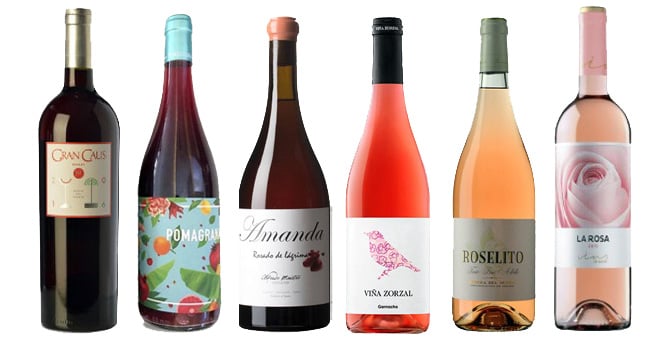
- Saignée rosé: healthy grapes in perfect condition are necessary to produce this kind of rosé. The technique that is used consists of macerating the grapes for a few hours to make the must turn reddish, thanks to the colour of the grapes’ skin. Generally, the more contact, the more of a reddish colour the wine will have. When the producer think it is necessary, he leaves if to macerate with the skins and vats the juice without pressing. Then, the wine can be stabilised and bottled, or it can be left to age in barrels. Some good examples of this type of wine are: Gran Caus Rosado, Dido La Solución Rosa.
- Direct pressing rosé: with this method, one red variety is turned into wine as if it were a white variety. Grapes are introduced in the press and they are left to macerate for a short period before they are pressed. The pressing process immediately begins. This part is paramount, as it will mark the two most important features of rosé wine: colour and tannicity. Usually, this kind of rosé has less colour intensity, but it has slightly more tannicity thanks to the pressing. The more the grape is pressed, the more colour and structure it gives the wine. In this case, Roselito would be the finest example of this category.
- Clarete: this is another style of making “rosé”. It is very common in several parts of northern Spain, like Cigales or Rioja. The main difference with the other methods is that the must, formed by white and red varieties, ferments with the skins of the red grapes. This means that red grapes and white grapes, or white must, are mixed during the fermentation of the red wine. As they have a high percentage of white grape, these wines are frequently more acid and bitter, which gives them a very elegant richness. After fermentation, some wines are transferred to barrels to give them greater longevity, like the Clarete of Dominio del Águila.
As always, another essential variable to differentiate rosé wines is the grape variety, which also influences the way the wine is made. For example, with Grenache we obtain more fruity wines; with Tempranillo, Merlot and Cabernet, we achieve more spiciness. With these varieties, the saignée production method is commonly used, to avoid the extraction of the more tannic components.
Spring and summer are the perfect seasons to perceive the different nuances of the various rosé wines. We have prepared a varied selection for you to enjoy.