




 Red wine
 White wine
 Rosé wine
 Primeurs
 Sherry and Port wine
 Sweet wine
 Orange wine
 Vermouth
 Champagne
 Cava
Cava Prosecco
 Lambrusco
 Crémant
 Moscato d'Asti
 Franciacorta
 Pet-Nat
 Corpinnat
 Other sparkling wines
 Rhum
Rhum Gin
Gin Whisky
 Vodka
Vodka Cognac
 Brandy
 Pastis
 Tequila
 Mezcal
 Grappa and Eau de vie
 Calvados
 Liqueurs
 Pacharán
 Apéritifs
 Wine gift boxes
 Boxed wines
 Boxed sparkling wines
 Wine bottles and glasses
 Gift card
 Non alcoholic Wine
 Non alcoholic Sparkling wine
 Non alcoholic Gin
 Other non-alcoholic drinks
 Aromas
 Wine conservation
 Decanters and aerators
 Bottle identifiers
 Corkscrews
 Service
 Glass identifiers
 Cleaners
 Accessories set
 Wine glasses
 Contact

Germany, the white wine country
German winemaking is known mainly for its white wines. Wines that hold onto freshness, intensity and fragrance for years and that have become famous around the world. Find out more about German wines and try them for yourself.
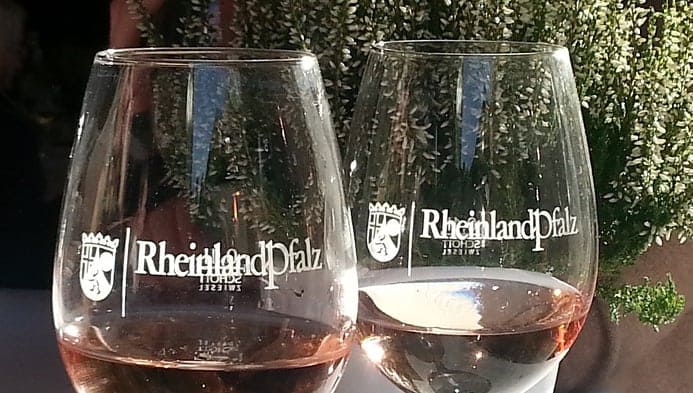
Germany is a white wine country. A cold area right on the northern edge of vine growing in Europe where the best vineyards are located in the west and south of the country. Being the eighth largest winemaking country in the world, there are differing opinions when it comes to German wines. While some consumers think of Germany as a producer of elegant and aromatic white wines, others associate it with cheap semi-sweet wines known as Liebfraumilch. However, there is an increasing number of producers who want to distance themselves from this image of feisty wine and give it the high-quality identity it deserves. The secret lies in the balance of two essential elements: sugar and acidity. On their own, each of these offers a lifeless wine, but the combination of both spectacularly enhances the essence of the grape and the terroir.
Wines marked by the Rhine
It might have been the Romans who were the first to plant vines in Germany. Aware of the cold climate of central Europe, they made up for it by looking for the best locations. What they found were the slopes near the banks of the Rhine river and its tributaries, facing the sun and with an exceptional microclimate. That means there is a perfect constant warmth for the grapes to ripen as well as developing excellent natural acidity.
In fact, wines classified as Qualitätswein (quality wine) that account for 90% of Germany’s total production, are made mainly around the Rhine, Moselle and Nahe rivers in the south-west of the country. There is great diversity in the soils and varieties, which is reflected in the thirteen wine regions: Arh, Baden, Franconia, Hesseische Bergstraße, Mitteirhein, Moselle-Saar-Ruwer, Nahe, Palatinate, Rheingau, Rheinhessen, Saale-Unstrut, Saxony and Württemberg.
Riesling, the star variety
As for the varieties grown in Germany, there are both white and red grapes, but the leading variety is Riesling. Originally from the Rhine region, the cold and humid weather in Germany is closely associated with this white variety. It is a very aromatic grape with marked acidity that is best expressed in the Moselle, Rheingau, Nahe and Palatinate regions.
The second best-selling and most common variety is the Müller-Thurgau, a somewhat inferior Riesling hybrid. Other white varieties cultivated include the Pinot Blanc, Gewürztraminer and Sylvaner. Far fewer red grapes are grown, but those that are include Spätburgunder (Pinot Noir), Lemberger and Dornfelder.
Quality classification
Although for a long time there has been no official regulation of vineyard classification, everything changed when a group of German winegrowers joined together to promote the quality of their wines. The Association of German Wine Estates (VDP) sets strict limits on production to reaffirm the value of the country’s best plots. Classified in four ascending levels (Gutswein, Ortswein, Erste Lage and Grosse Lage), they all have an eagle with a bunch of grapes printed on the bottle label. However, although this classification is straightforward, unfortunately it is not realistic as it only includes the 200 members of the association.
Although there is no quality classification that includes all German wines, German wine legislation requires the bottle’s label to state one of the following categories:
– Deutscher Tafelwein are the basic table wines. Production levels are high and they are normally light and light-bodied wines.
– Deutscher Landwein is the equivalent of the Vinos de la Tierra classification. They must be made with at least 85% of the grapes from the aforementioned rural wine region and with a minimum alcohol content.
– Qualitätswein bestimmter Anbaugebiete (QbA) are quality wines that are made in one of the 13 classified wine regions.
– Qualitätswein mit Prädikat (QmP) are quality wines with specific attributes. These wines indicate the level of maturity of the grapes and cannot be chaptalised, that is, no sugar is added to them during production. This is where you will find VPD wines and they can be either dry (Kabinett) or semi-sweet (Spätlese and Auslese), sweet (Beerenauslese) or very sweet (Trockenbeerenauslese).
“Noble Rot”, the German crown jewel
Prädikat wines, that is, wines of superior quality, are increasingly classified by the level of sugar they contain. This means the more ripe the grape, the sweeter the must. To do this, the berries are left to over-ripen in the vineyard and some of the harvest may even start to become sun-dried through “noble rot”. This is where the fungus, Botrytis cinerea, develops over two to four weeks towards the end of the maturation cycle and produces grapes that can be used to make extremely prestigious and high-quality sweet wines.
However, given that sweet wines are not as popular as some others, there are many producers that have decided to make dry or very dry wines (Trocken) that are easy to pair with food. This was a trend that emerged in the 80s and has given Germany a wide range of wonderful wines with their diverse combinations of sugar and acidity. Balance is the key ingredient.


