




 Red wine
 White wine
 Rosé wine
 Primeurs
 Sherry and Port wine
 Sweet wine
 Orange wine
 Vermouth
 Champagne
 Cava
Cava Prosecco
 Lambrusco
 Crémant
 Moscato d'Asti
 Franciacorta
 Pet-Nat
 Corpinnat
 Other sparkling wines
 Rhum
Rhum Gin
Gin Whisky
 Vodka
Vodka Cognac
 Brandy
 Pastis
 Tequila
 Mezcal
 Grappa and Eau de vie
 Calvados
 Liqueurs
 Pacharán
 Apéritifs
 Wine gift boxes
 Boxed wines
 Boxed sparkling wines
 Wine bottles and glasses
 Gift card
 Non alcoholic Wine
 Non alcoholic Sparkling wine
 Non alcoholic Gin
 Other non-alcoholic drinks
 Aromas
 Wine conservation
 Decanters and aerators
 Bottle identifiers
 Corkscrews
 Service
 Glass identifiers
 Cleaners
 Accessories set
 Wine glasses
 Contact

Seductive Pedro Ximénez sweet wine
We know that Pedro Ximénez are responsible for some of the most captivating and long-lived sweet wines in the world, but behind this name there are stories, legends and other curious facts. Let’s find out a little more about this seductive sweet wine.
Pedro Ximénez, a very Andalusian German
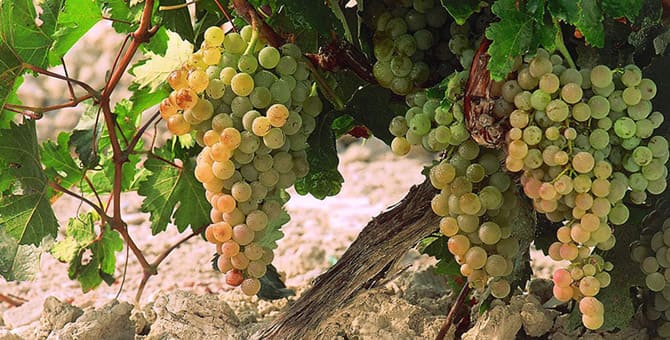
As well as being a man’s name, Pedro Ximénez is the name of a white grape variety with significant presence in Andalusia but which can also be found in other enclaves, even outside Spain such as Portugal, Australia or Chile.
Among the stories and legends about its origin that of a German soldier from the Flanders regiment stands out. In the 16th century, he travelled from Germany to southern Spain carrying a vine in his backpack that matched a native variety of his land, perhaps the Riesling or Elbling grape, which apparently loved the southern climate and thus found a new home.
By making the name of this German soldier Spanish, the present name of the Pedro (Peter) Ximénez (Siemens) variety was derived, retaining the “x” spelling, which was commonly used at that time. This strain is also known as Alamis or Pedro Ximén or by its initials PX.
Years later, with DNA analysis of the variety, this romantic legend about the German origin of Pedro Ximénez and his relationship with the Riesling grape fell apart. It’s more related to the gibi variety which is said to come from Al-Andalus and introduced there by the Arabs.
We usually use the name Pedro Ximénez, or its initials PX, to refer to a style of known sweet wines which, inadvertently due to their fame, have adopted the name of the variety they are made with to name the resulting wines. That is to say, Pedro Ximénez is the name of the vine these sweet delights are made from, but is not in itself the name of the wine; something similar happens with sweet wines made with muscat grapes.
What is the Pedro Ximénez grape like?
As we’ve already mentioned, Pedro Ximénez is a white variety of large grapes with high sugar content, a quality which has allowed it to be the protagonist of sweet wines of excellent quality which are usually made by the process of “sunning” prior to vinification, which consists of exposing freshly harvested grapes to the sun to dry them and thus increase the grapes’ sugar concentration. This variety has a fine skin which is very favorable for carrying out this procedure.
What are their wines like?
The Pedro Ximénez variety is the queen of the Montilla-Moriles Denomination in Córdoba, Spain, where besides being used to make some of the longest-lasting, best known and award-winning sweet wines in the world, they’re also used to make white wines and fortified wines similar to those made with the Palomino variety at Marco de Jerez, under a veil flower and with the dynamic maturation system at soleras and criaderas.
In Jerez, the Pedro Ximénez grape has an important presence in vineyards. There, it’s usually used for the production of fortified liquor wines which are created by fortifying or combining fortified wines with naturally sweet wines which result in wines with varying degrees of sweetness, but always with an amount of residual sugar exceeding 5 grams per litre. The best known are the Pale Cream, Medium and Cream.
Naturally sweet wines are also made with the Moscatel and Pedro Ximénez varieties which, as we’ve already mentioned, are made by “sunning” the bunches from which, after pressing, musts with an extraordinary concentration of sugar and a certain level of colouring are obtained, the fermentation of which stops with the addition of wine alcohol.
The Regulatory Board of the Denomination of Origin Jerez-Xérès-Sherry created two special categories to certify the age of true oenological jewels such as long-aged wines. Therefore, if on any label you see the acronym VOS (Vinum Optimum Signatum or Very Old Sherry) it means that this wine is at least 20 years old. And if the acronym VORS (Vinum Optimum Rarum Signatum or Very Old Rare Sherry) appears, it means that this bottle contains a wine of at least thirty years old.
It’s very possible that some of these wines which go through the system of Soleras and Criaderas have a proportion of wines which come from centenary Soleras. That said, they’re all historical gems of world oenology!
On the contrary, if someone offers you a wine of this denomination assuring you that it’s vintage, don’t believe them if it isn’t certified with one of these labels on the bottle.
What do these sweet PX wines have that seduces?
They’re perhaps the sweetest wines we can find in the world, but at the same time they’re of a very interesting complexity and intensity.
Despite their sweetness, we can find much freshness and harmony in them because the “sunning” procedure they are made with concentrates sugars but also the natural acidity of the grape, which is why they’re so surprising and capable of creating legendary contrasts.
They are ebony in colour, almost black, with iodine reflections, ample free-run juice and considerable density.
They offer sweet aromas which remind us of raisins, figs or dried dates, accompanied by notes of honey, rice and candied fruits or compote and, as they age, they become even more complex offering an aromatic palette of toasted notes, chocolate or liquorice.
In the mouth, they caress our palate with their velvety and smooth texture and enter with a sweet power that is reduced by the expression of acidity, some may even offer us a subtle saline hint. They’re a warm embrace of flavoursome and practically everlasting finish.
These wines are a dessert in themselves. If you want to die of love, try them slightly chilled, between 12 and 14º, if they are old vintages. Younger ones you can try cold, even.
Sweet PXs are an excellent tool of seduction because they go wonderfully with high-intensity blue cheeses or slightly bitter chocolate-based desserts, ideal combinations to surprise.
We bet that no one can resist trying a chocolate or vanilla ice cream, for example, bathed in a delicious and dense sweet Pedro Ximénez wine and who wouldn’t melt if they started with breakfast in bed consisting of hot pancakes, which instead of syrup are covered in a tempting sweet PX! What a temptation!
Can Pedro Ximénez wines be served with aperitives, rice or fish?
Of course!
Remember that, although this variety is best known for its extraordinary sweet wines, white wines and dry fortified wines are also made with it, which are perfect companions for aperitives, rice dishes and all kinds of fish and seafood.
Everything that can have a characteristic aromatic strength; don’t expect these wines to be sweet or semi-sweet. Some may be even drier than you imagine.
Monovarietal white wines from Pedro Ximénez are also produced in some areas outside Andalusia or in coupages with local varieties such as in the Priorat region where you can find dry whites, with a mineral note and much elegance.
And, speaking of aperitifs, vermouth is also made with base wines of the Pedro Ximénez variety, another great way to approach this very versatile grape. The Pedro Ximénez variety certainly seduces its all its versions!


