



 Red wine
 White wine
 Rosé wine
 Primeurs
 Sherry and Port wine
 Sweet wine
 Orange wine
 Vermouth
 Champagne
 Cava
Cava Prosecco
 Lambrusco
 Crémant
 Moscato d'Asti
 Franciacorta
 Pet-Nat
 Corpinnat
 Other sparkling wines
 Rhum
Rhum Gin
Gin Whisky
 Vodka
Vodka Cognac
 Brandy
 Pastis
 Tequila
 Mezcal
 Grappa and Eau de vie
 Calvados
 Liqueurs
 Pacharán
 Apéritifs
 Wine gift boxes
 Boxed wines
 Boxed sparkling wines
 Wine bottles and glasses
 Gift card
 Non alcoholic Wine
 Non alcoholic Sparkling wine
 Non alcoholic Gin
 Other non-alcoholic drinks
 Aromas
 Wine conservation
 Decanters and aerators
 Bottle identifiers
 Corkscrews
 Service
 Glass identifiers
 Cleaners
 Accessories set
 Wine glasses
 Contact

The Success of Zoning
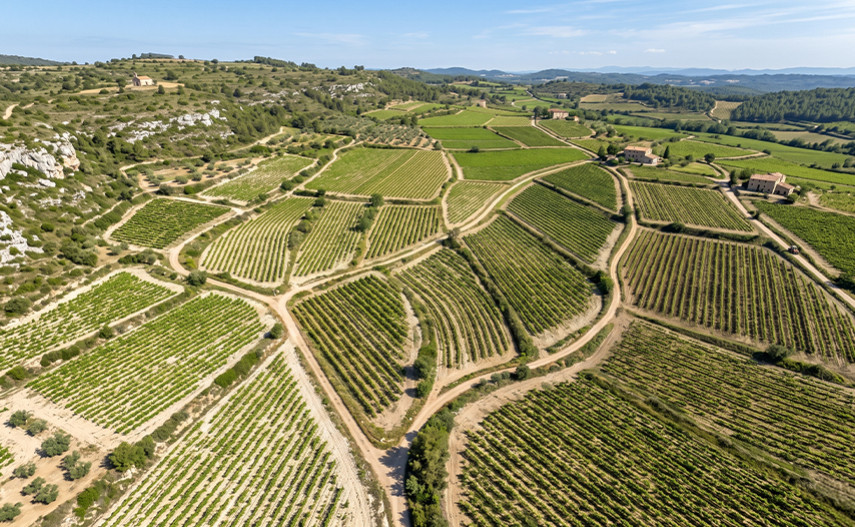
How can a single vineyard tell different stories? Zoning is the key to uncovering how each corner of the origin gains significance.
At first glance, a vineyard may appear uniform. Neat rows, the same shade of green, the same promise. Yet, a mere scratch beneath the surface reveals a mosaic brimming with nuances.
This is where zoning comes into play: the tool that allows for an almost surgical understanding of what is happening in every corner of the vineyard.
Zoning involves dividing the vineyard into homogeneous areas based on soil, climate, orientation, or vine behaviour. Essentially, it acknowledges that not all plots tell the same story, and each deserves to be heard in its own way. Because the quality of wine does not begin in the winery, but much earlier, in how that place is interpreted.
In this regard, zoning becomes the practical translation of a concept as evocative as terroir. This oft-repeated term takes on a tangible form here: it ceases to be a romantic notion and transforms into maps, decisions, and precision. It is the transition from intuiting the vineyard to truly understanding it.
And it is neither a new nor theoretical idea: some of the world's most admired regions have been refining this language for decades, even centuries. In Burgundy, for instance, the hierarchy of climats (vineyard plots precisely delineated according to their unique characteristics) has turned subtle soil differences into wines with almost unrepeatable identity. In Priorat, the reading of the terrain—with its steep slopes and distinctive llicorella—has powerfully expressed the character of each vineyard. And in Rioja, the drive to differentiate municipalities and unique vineyards clearly demonstrates how zoning continues to evolve to better convey origin.
Once understood, everything changes. Viticulture becomes more refined: the variety is better chosen, plant management is adjusted, and harvesting is timed perfectly for each zone. It is a more intelligent, respectful way of working, and also better equipped for current challenges, such as climate change. As if the vineyard ceases to be a collective and begins to be fine-tuned like an instrument.
But there is more. Zoning not only enhances cultivation but also redefines how wine is narrated. It allows for discussions about plots, specific origins, and subtle differences that define identity. In a market where everything competes for attention, that authenticity is not a mere detail: it is the true value.
Because, ultimately, zoning is not about dividing the land. It is about revealing it. It is about understanding that every metre of vineyard has something to say… and that good wine begins precisely there, when someone decides to listen.